

Batana oil is everywhere right now. Scroll through hair content for five minutes and you'll find someone crediting this thick, earthy oil from Honduras for their thicker, longer hair. The before-and-after photos are compelling, and the hype is loud.
But loud isn't the same as proven, so let's separate what batana oil can genuinely do from what it's being sold as. If you're deciding whether it deserves a spot in your routine, here's the honest, evidence-based answer.
Does batana oil work for hair growth?
Here's the short version: there's no scientific evidence that batana oil regrows hair or reverses hair loss. What it can do is condition your hair and scalp, which may reduce breakage and make your hair look healthier and fuller. Those are real benefits, but they're not the same as stimulating new growth.
In other words, batana oil is a good moisturizer with a great marketing story. The regrowth claims are running well ahead of the science.
What is batana oil?
Batana oil, sometimes called ojon oil, is extracted from the nut of the American oil palm, traditionally by the Miskito people of Honduras, who are often referred to as the people whose hair it's said to protect. It's rich in fatty acids, antioxidants, and vitamin E.
Those components are genuinely good for hair fibers and scalp skin. They're the same reasons any nourishing oil can leave hair softer and more manageable. The question isn't whether batana is moisturizing, it's whether it does anything special for growth.
What the science actually says about batana oil

This is where the story gets thin. Despite the viral popularity, batana oil has essentially no clinical research behind it for hair growth.
Reviews of the medical literature come back empty. As one evidence review put it bluntly, systematic searches of medical databases "reveal zero peer-reviewed studies specifically testing batana oil's effects on hair growth." Dermatologists and trichologists echo this, noting there's no clinical trial data showing batana oil regrows hair, prevents loss, or reverses balding.
That doesn't mean it's useless. It means the confident regrowth claims you're seeing online are based on personal anecdotes and product marketing, not on studies. When you can't find a single trial testing a product's headline claim, that's a meaningful signal.
What batana oil probably can do

To be fair to it, batana oil likely offers real, if modest, benefits, just not the ones going viral.
By coating and moisturizing the hair shaft, it can reduce breakage and split ends, which helps you retain the length you've already grown. A well-conditioned scalp and less snapping can make hair look fuller and healthier over time. So if someone's hair "grew" after using batana, what often happened is that less of it was breaking off, not that they sprouted new follicles. That's a legitimate win for hair health, but it's damage prevention, not growth stimulation.
Batana oil versus rosemary oil: the evidence gap

The contrast with better-studied oils is stark, and it's the most useful thing to understand here.
Rosemary oil has actual human trial data. In a six-month randomized study, it performed comparably to 2 percent minoxidil for pattern hair loss, with users reporting less scalp itching, which we cover in does rosemary oil actually help with hair growth. Peppermint oil has promising research too. In a controlled study, researchers reported that the "peppermint oil group showed the most prominent hair growth effects; a significant increase in dermal thickness, follicle number, and follicle depth," and it outperformed minoxidil on those measures in that experiment.
Batana oil has nothing comparable. So while batana is trending, the oils with genuine growth evidence are rosemary and peppermint. If your goal is growth rather than conditioning, that distinction should drive your choice.
Why "reduced breakage" isn't the same as "regrowth"

This is the trap most viral hair products rely on, so it's worth being clear. Reducing breakage keeps the hair you already have. Stimulating growth means influencing the follicle to produce more or thicker hair. They feel similar in the mirror but come from completely different mechanisms.
Genuine growth support works on the follicle and scalp environment, addressing things like circulation and inflammation and, in the case of pattern loss, the DHT-driven miniaturization we explain in what DHT is. A conditioning oil that simply strengthens the strand doesn't touch any of that. Both have a place, but only one addresses why hair thins in the first place.
So should you use batana oil?
If you like it as a deep-conditioning treatment for dry, brittle, or damaged hair, it's a perfectly reasonable choice, and reducing breakage is a real contribution to fuller-looking hair. Just use it with accurate expectations.
What you shouldn't do is rely on it as your hair growth treatment or expect it to reverse thinning or balding. If growth is the goal, batana belongs alongside evidence-backed actives, not in place of them. And because it's heavy and occlusive, go easy on the amount, especially if your scalp is prone to flaking or buildup.
What actually has evidence for hair growth

If you want your routine built on science rather than trends, focus on the ingredients that have earned it. Rosemary and peppermint are the two most researched natural oils for hair, supporting scalp circulation and the follicle environment where growth actually happens.
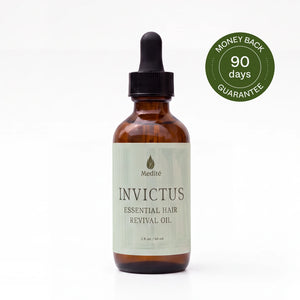
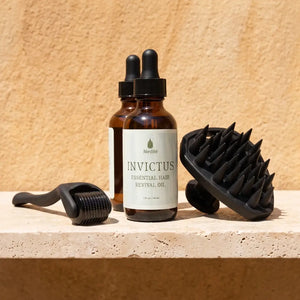
That's exactly why our Invictus Essential Hair Revival Oil is built around rosemary and peppermint rather than whatever is trending this month, with the studies behind each ingredient laid out on our Why It Works page. For a full scalp-focused routine, the Medíté Starter Kit pairs the oil with the tools to work it in. Use a conditioning oil like batana for the strand if you enjoy it, and an evidence-backed formula for the follicle. That's how you cover both length retention and real growth support.
Frequently asked questions
Is batana oil scientifically proven to regrow hair?
No. There are no peer-reviewed studies showing batana oil regrows hair or reverses hair loss. Its benefits are conditioning and reducing breakage, not stimulating new growth.
Why do people say batana oil grew their hair?
Often because it reduced breakage, letting them keep and show more length, rather than producing new follicular growth. Better length retention can look like growth without being it.
Batana oil or rosemary oil for hair growth?
Rosemary oil has human trial evidence for growth, while batana oil doesn't. For growth specifically, rosemary, ideally paired with peppermint, is the better-supported choice.
Can I use batana oil with a rosemary oil?
Yes. Many people use a conditioning oil like batana on the lengths for breakage and an evidence-backed rosemary and peppermint formula on the scalp for growth support.
The bottom line on batana oil for hair growth
Batana oil is a genuinely nice conditioning oil with a viral reputation it hasn't earned scientifically. It can soften hair and cut down on breakage, which helps you keep what you've grown, but no studies support the regrowth claims fueling the hype.
If you want results backed by research, put rosemary and peppermint at the center of your routine and let batana be an optional conditioner, not the main event. Trends come and go. Evidence is what actually grows on you.
Sources
- Panahi Y, Taghizadeh M, Marzony ET, Sahebkar A. "Rosemary oil vs minoxidil 2% for the treatment of androgenetic alopecia: a randomized comparative trial." SKINmed. 2015;13(1):15-21. https://pubmed.ncbi.nlm.nih.gov/25842469/
- Oh JY, Park MA, Kim YC. "Peppermint Oil Promotes Hair Growth without Toxic Signs." Toxicological Research. 2014;30(4):297-304. https://link.springer.com/article/10.5487/TR.2014.30.4.297
- Parade. "Does Batana Oil Actually Help With Hair Growth? What Trichologists Want You To Know." https://parade.com/beauty/batana-oil-hair-growth