

Most hair loss creeps in from the inside, driven by hormones or genetics. This one you're doing to yourself, usually without realizing it. If you've noticed your hairline thinning at the temples, tiny bumps along your part, or a tender scalp after a tight ponytail or fresh braids, your hairstyle might be the culprit.
It's called traction alopecia, and the good news is that it's one of the few types of hair loss you can often stop and even reverse, if you catch it in time. Here's how it works and what to do about it.
What is traction alopecia?

Traction alopecia is hair loss caused by repeated pulling on the hair follicles. When your hair is held under constant tension, the strain slowly weakens and damages the follicles until they stop producing hair.
Unlike pattern baldness, this isn't about DHT or your genes. It's mechanical, a direct result of the physical force your styling puts on your roots day after day. That's actually encouraging, because it means the cause is something you can change.
What causes traction alopecia?

Any hairstyle that keeps your hair pulled tight can contribute, especially when it's worn that way for hours, every day, for years. The usual suspects include tight ponytails, buns, and man buns, braids, cornrows, dreadlocks, pigtails, and weaves or extensions that add weight and pull to the roots.
The tension adds up. A single tight ponytail won't hurt you, but wearing one daily for years is a slow, repetitive strain on the same follicles. The risk climbs when styles are worn on chemically relaxed or heat-damaged hair, since already-weakened strands and follicles tolerate far less pulling. Even everyday habits like a nightly tight bun, a snug durag, or extensions left in too long can quietly contribute.
A simple rule cuts through all of it: if a hairstyle hurts, it's too tight. Pain, stinging, or a pulling sensation is your scalp telling you the tension is doing damage.
How common is traction alopecia?

More common than most people realize, particularly among those who regularly wear high-tension styles. Population research by dermatologist Nonhlanhla Khumalo, one of the most cited investigators on this condition, found traction alopecia in about 17 percent of African schoolgirls and roughly 32 percent of adult African women, with the highest risk when traction was applied to relaxed hair.
That last detail matters for anyone: the combination of chemical processing and tight styling is especially damaging, because you're pulling on hair that's already compromised.
The early signs you shouldn't ignore

Catching traction alopecia early is everything, because early on it's reversible and later it may not be. The warning signs show up right where the tension is highest, usually the hairline, temples, and the edges of a part.
Look for small hairs left stranded along the very front of your hairline while the hair behind them thins, a pattern dermatologists call the fringe sign. Other early clues include little red bumps or pimples around the follicles, tenderness or a headache-like ache after styling, redness, and short broken hairs at the edges. If you're seeing these, treat them as an alarm, not a nuisance.
Is traction alopecia reversible?

This is the most important question, and the answer depends entirely on timing. As the dermatology literature puts it plainly, traction alopecia "is initially reversible, but it becomes irreversible with prolonged repeated damage."
In the early stage, the follicles are strained but still alive, and simply removing the tension often lets the hair recover. If the pulling continues for years, though, the damage can progress to scarring, where the follicle is replaced by scar tissue and the loss becomes permanent. There's a window, and acting inside it is what protects your hair. A review in the International Journal of Women's Dermatology framed the whole prevention message in its title: "It's too tight, loosen up and let your hair down."
Where traction alopecia usually shows up

Because it follows the tension, traction alopecia has a recognizable map. It most often appears at the frontal hairline and the temples, the areas pulled hardest by ponytails, buns, and braids. It can also show along a part worn in the same place, or at the nape if styles pull from the back.
This front-and-temple pattern is one way it can be mistaken for a receding hairline, though the causes are completely different. If your concern is the hairline generally, we cover that territory in can rosemary oil help a receding hairline.
How to prevent and treat traction alopecia

The core fix is refreshingly direct: reduce the tension. The American Academy of Dermatology's guidance is essentially to switch to looser styles and give your follicles a break, and their advice on high-risk habits is captured in the title of their own patient resource, "Hairstyles that pull can lead to hair loss."
A few practical moves do most of the work. Wear looser styles and let your hair down when you can, especially at home and overnight. Rotate your styles instead of parting or pulling the same spot every day. Take breaks between protective styles like braids and extensions rather than going straight from one tight set to the next, and don't leave them in too long. Go easy on the heat and harsh chemical relaxers that weaken strands, and never accept a style so tight it hurts.
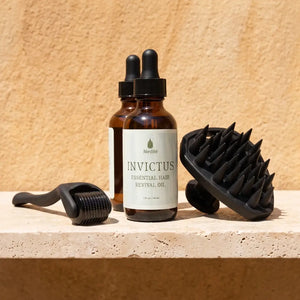
Supporting the scalp helps recovering follicles rebound once you've relieved the pressure. Keeping circulation up and the scalp calm gives strained-but-living follicles the best environment to regrow, which is the thinking behind our Invictus Essential Hair Revival Oil and the routine in the Medíté Starter Kit, with the reasoning on our Why It Works page. It's a complement to removing the tension, not a replacement, since no oil will outrun a ponytail that's still too tight.
Traction alopecia versus pattern hair loss

It's worth telling these apart, because they call for different responses. Traction alopecia is mechanical, tied directly to tight styling, and it concentrates where the pulling happens, usually the hairline and temples, often with the tell-tale fringe sign and little bumps.
Pattern hair loss is hormonal, driven by DHT shrinking follicles over years across the whole top of the scalp, as we explain in what DHT is. You can have both at once, and our overview of why hair thins helps place them side by side.
When to see a dermatologist
Get checked if you notice bald or thinning patches at your hairline or temples, persistent bumps or tenderness, or the fringe sign, and especially if changing your styling hasn't helped after a few months. A dermatologist can confirm whether follicles are still viable and catch the condition before it reaches the scarring stage, which is exactly when intervention matters most.
Frequently asked questions
Does traction alopecia grow back?
Often, yes, if it's caught early and the tension is removed while the follicles are still healthy. Once prolonged pulling causes scarring, the loss can become permanent, which is why early action is critical.
What hairstyles cause traction alopecia?
Tight ponytails, buns and man buns, braids, cornrows, dreadlocks, pigtails, and heavy weaves or extensions, particularly when worn on relaxed or heat-damaged hair or kept in for long stretches.
What is the fringe sign in traction alopecia?
It's a row of short, retained hairs left along the very front of the hairline while the hair just behind thins out. Dermatologists use it as an early diagnostic clue.
How do I know if it's traction alopecia or a receding hairline?
Traction alopecia follows your styling tension, usually at the temples and hairline, often with bumps or tenderness, while a receding hairline from pattern loss is hormonal and progresses more evenly over years. A dermatologist can confirm which it is.
The bottom line on traction alopecia
Traction alopecia is hair loss you can often prevent and reverse, because you control the cause. Constant pulling from tight styles strains the follicles at your hairline and temples, and if it goes on long enough it can become permanent.
Watch for the early signs, loosen up your styles, give your scalp regular breaks, and support the follicles while they recover. As the researchers put it, let your hair down, and you'll usually keep more of it.
Sources
- Khumalo NP, Jessop S, Gumedze F, Ehrlich R. "Determinants of marginal traction alopecia in African girls and women." Journal of the American Academy of Dermatology. 2008;59(3):432-438. https://pubmed.ncbi.nlm.nih.gov/18694677/
- Pulickal JK, Kaliyadan F. "Traction Alopecia." StatPearls / review literature. https://pmc.ncbi.nlm.nih.gov/articles/PMC8530059/
- Haskin A, Aguh C. "The art of prevention: It's too tight, loosen up and let your hair down." International Journal of Women's Dermatology. 2021. https://www.sciencedirect.com/science/article/pii/S2352647521000216
- American Academy of Dermatology. "Hairstyles that pull can lead to hair loss." https://www.aad.org/public/diseases/hair-loss/causes/hairstyles