You wash your hair in the morning.
By the evening, it already feels flat.
The roots look shiny. Your hairstyle loses volume. Running your fingers through your hair leaves them feeling oily, even though you just shampooed hours ago.
For many people, fast-growing oil becomes part of daily life. It can also create another concern that often follows:
Is an oily scalp causing my hair to thin?
The answer is more complicated than a simple yes or no.
An oily scalp does not automatically cause hair loss, but understanding why your scalp produces oil and how that environment affects your hair can help you build a healthier long term routine.
Why Your Scalp Produces Oil in the First Place

Every hair follicle is connected to a sebaceous gland.
These glands produce sebum, a natural oil that helps protect both the scalp and the hair shaft. Sebum reduces moisture loss, lubricates growing hair, and forms part of the skin's protective barrier.
Without it, the scalp would become excessively dry and irritated.
The problem begins when oil production exceeds what your scalp actually needs.
Instead of coating the hair lightly, excess sebum accumulates around the roots. Hair begins sticking together, losing volume and exposing more of the scalp beneath it.
This is one reason people with oily hair often feel like they are losing density, even when the number of hairs on their scalp has not changed.
Does an Oily Scalp Cause Hair Loss?

Current scientific evidence does not show that excess scalp oil alone causes male pattern hair loss.
The most common cause of progressive hair thinning remains androgenetic alopecia, a condition driven primarily by genetics and DHT sensitivity.
DHT gradually miniaturizes susceptible follicles over multiple hair growth cycles. As follicles shrink, new hairs grow back finer and shorter until overall hair density decreases.
That biological process happens beneath the scalp.
Sebum, by itself, does not trigger follicle miniaturization.
However, an excessively oily scalp may contribute to an environment where buildup, irritation, and inflammation become more likely if scalp hygiene is neglected.
That distinction is important because healthy hair growth depends on more than one variable.
Why Hair Looks Thinner When It's Oily

One of the biggest misconceptions about greasy hair is that it creates hair loss overnight.
In reality, oil changes the way hair behaves.
Individual strands begin clumping together instead of spreading evenly across the scalp. Less coverage means more light reaches the skin underneath, making areas like the crown or hairline appear thinner than they actually are.
We've explored similar visual effects in previous articles discussing why hair looks thinner under bright lights, why your scalp is more visible when your hair is wet, and why photographs often exaggerate thinning.
Oil creates another version of the same optical illusion.
The density may not have changed overnight.
The appearance has.
What Causes Your Hair to Get Greasy So Quickly?

Several factors influence sebum production.
Genetics play a significant role, which is why some people naturally have oilier scalps than others.
Hormones also affect sebaceous gland activity, particularly during adolescence and early adulthood.
Daily habits matter as well. Overusing heavy styling products, infrequent cleansing, or touching your hair throughout the day can all contribute to hair that feels greasy more quickly.
Even climate can play a role. Warm, humid environments often make excess oil more noticeable.
The goal is not eliminating scalp oil altogether.
Healthy scalps are supposed to produce oil.
The goal is maintaining balance.
Why Scalp Health Matters More Than Ever

Hair care has gradually shifted away from simply treating the hair strand.
Researchers increasingly recognize the scalp as the foundation of healthy looking hair.
Follicles, circulation, inflammation, and the surrounding scalp environment all contribute to long term hair quality.
That growing understanding has helped make rosemary oil one of the most widely discussed natural ingredients in modern hair care.
A clinical study published on PubMed compared rosemary oil with 2% minoxidil in individuals experiencing androgenetic alopecia. After six months of consistent use, researchers observed significant increases in hair count among participants using rosemary oil. Interestingly, participants using rosemary oil also reported less scalp itching by the end of the study, suggesting it may support overall scalp comfort in addition to hair growth.¹
Rather than focusing solely on the hair itself, the research reinforces the importance of supporting the scalp where every strand begins.
You can learn more about the research and formulation philosophy behind scalp focused care on our Why It Works page.
Building a Routine for an Oily Scalp

The best routines are rarely the most complicated.
Consistent cleansing, avoiding unnecessary product buildup, and supporting overall scalp health generally provide better long term results than constantly switching between harsh treatments.
Hair growth is a gradual biological process. The healthier the environment surrounding the follicle, the better positioned it is to produce healthy hair over time.
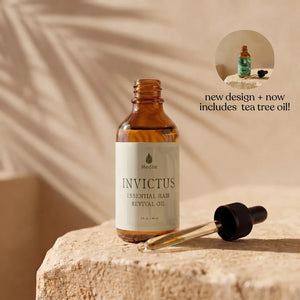
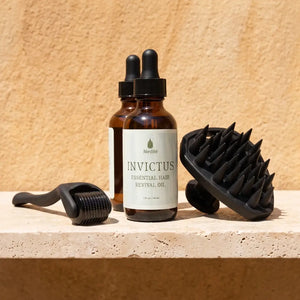
Our Invictus Essential Hair Revival Oil was formulated with scalp wellness in mind, using premium ingredients designed to fit comfortably into a consistent hair care routine.
If you're beginning your hair wellness journey, the Medíté Starter Kit offers a simple place to start and currently includes complimentary free U.S. shipping over $35 and free welcome gifts.
The Bottom Line
If your hair gets greasy quickly, it does not necessarily mean you are losing your hair.
An oily scalp often changes how your hair looks before it changes anything else. Strands cling together, volume decreases, and the scalp becomes more visible, creating the impression of thinning.
The most important factors behind long term hair growth remain follicle health, genetics, DHT sensitivity, and consistent scalp care.
Understanding the difference between appearance and biology allows you to focus your attention where it matters most: building a healthier scalp environment that supports stronger, healthier looking hair over time.
¹ Panahi Y, et al. Rosemary oil vs. minoxidil 2% for the treatment of androgenetic alopecia: a randomized comparative trial. Skinmed. 2015.