One of the most frustrating parts of any hair growth journey is the waiting.
Someone starts a new routine, takes a photo, checks the mirror every morning for two weeks, and sees... almost nothing.
That experience leads many people to the same conclusion:
"This product isn't working."
In reality, the problem is often not the product. It's a misunderstanding of how hair growth actually works.
Hair growth can feel remarkably slow. In fact, one of the biggest reasons people abandon potentially effective routines is because they underestimate how long the biological process takes.
Understanding the hair growth cycle may be one of the most important things anyone can learn before beginning a scalp care routine.
Your Hair Is Never Just Growing


Every hair follicle on your scalp operates on its own schedule.
At any given moment, some hairs are actively growing, some are resting, and some are preparing to shed. This process is known as the hair growth cycle, and it continues throughout your life.
The active growth phase, called anagen, can last anywhere from two to seven years. During this period, hair continues growing from the follicle beneath the scalp.
After that comes a transition phase known as catagen, followed by telogen, a resting phase where hair prepares to shed naturally.
This is why losing hair in the shower or seeing strands on your pillow is not automatically a sign of hair loss. Shedding is a normal part of the cycle.
The challenge begins when new hairs return thinner than the ones they replaced.
Why Hair Growth Progress Feels Invisible


Hair grows roughly half an inch per month on average.
That means meaningful changes often happen so gradually that they are difficult to notice day to day.
Imagine watching a tree grow.
If you stare at it every morning, it appears unchanged. Look back six months later and the difference becomes obvious.
Hair behaves the same way.
This is one reason people searching for terms like "how long does rosemary oil take to work for hair growth" or "when will I see hair growth results" often become discouraged too early. The timeline of hair biology is simply slower than most people expect.
Why Consistency Matters More Than Intensity

When people become impatient, they often respond by changing products repeatedly.
A new oil this month.
A new shampoo next month.
A completely different routine six weeks later.
Unfortunately, hair follicles do not respond well to constant experimentation.
The routines that tend to produce the best long term outcomes are usually the ones people can maintain consistently over several months. That is why scalp health has become such a central topic within modern hair care.
Researchers increasingly view healthy hair growth as part of a larger ecosystem involving circulation, follicle health, inflammation management, and overall scalp condition.
Why Rosemary Oil Became One of the Most Discussed Hair Growth Ingredients

Rosemary oil moved from traditional wellness circles into mainstream hair care after a widely discussed clinical study compared rosemary oil with 2% minoxidil in individuals experiencing androgenetic alopecia.
After six months, researchers observed significant increases in hair count among participants using rosemary oil consistently. (pubmed.ncbi.nlm.nih.gov)
What made the study especially interesting was not just the results. It highlighted something many people overlook: six months.
Not six days.
Not six weeks.
Six months of consistency.
That timeline aligns closely with how hair follicles naturally operate.
For a deeper look at the science behind scalp health, circulation, and rosemary oil, visit our Why It Works page.
The Hidden Reason Before and After Photos Can Be Misleading


Hair growth transformations often appear dramatic because they compare two moments separated by several months.
What those photos rarely show is the period in between.
The weeks when nothing seemed to be happening.
The months where progress felt invisible.
The reality is that healthier looking hair density tends to develop gradually. Early improvements are often subtle. Hair may appear slightly fuller under bright lighting. Styling may become easier. Certain areas may look less sparse in photographs.
These changes compound over time.
That is why many people searching for the best rosemary oil for thinning hair, a scalp routine for a receding hairline, or natural ways to improve hair density often find themselves disappointed when judging progress too quickly.
The Modern Shift Toward Scalp Health

Five years ago, most conversations about hair growth focused almost entirely on the hair strand itself.
Today, the discussion is different.
Researchers, dermatologists, and consumers are paying closer attention to the environment where hair begins: the scalp.
A healthier scalp supports healthier looking hair. That understanding has helped fuel growing interest in scalp focused routines, rosemary oil, and products designed around long term consistency rather than short term cosmetic effects.
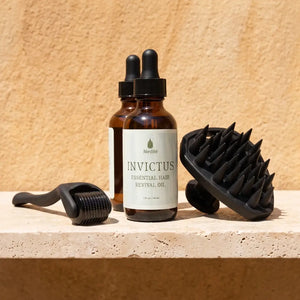
Our Invictus Essential Hair Revival Oil was formulated around that philosophy, with an emphasis on scalp wellness and sustainable daily use.
For people looking to simplify their routine from day one, the Medíté Starter Kit combines our core hair growth essentials and currently includes complimentary free U.S. shipping over $35 and free welcome gifts.
The Real Secret Behind Better Hair Growth Routines

Most people spend too much time looking for the perfect product and not enough time thinking about the perfect timeline.
Hair growth rewards patience.
The individuals who typically see the most meaningful long term improvements are often not the ones constantly chasing the newest trend. They are the ones who understand how hair biology works and stay consistent long enough to let the process unfold.
Hair follicles operate on their own schedule.
Once you understand that, the entire conversation around hair growth starts to make a lot more sense.