Few things trigger hair anxiety faster than a bright overhead light.
You catch your reflection in a bathroom mirror, an elevator, or a store window and suddenly your scalp seems far more visible than it did at home. The crown looks thinner. The hairline appears weaker. Areas that normally seem full suddenly look exposed.
For many people, this becomes the moment they start wondering whether they are actually losing hair.
The truth is that lighting can dramatically change the way hair appears. But it can also reveal something important about hair density that often goes unnoticed in everyday conditions.
Why Bright Lighting Changes Everything

Hair creates coverage by blocking light.
When hair density is high, less light reaches the scalp. As density gradually decreases, more light penetrates through the hair and reflects off the scalp beneath it.
This effect becomes especially noticeable under:
- overhead lighting
- direct sunlight
- bright bathroom mirrors
- camera flashes
- harsh LED lighting
That is why many people first notice thinning hair at the crown under bright lights long before they notice changes elsewhere.
The hair itself has not necessarily changed overnight. The lighting simply makes existing density differences easier to see.
Hair Density and Hair Loss Are Not the Same Thing

One reason people become confused is because hair density and hair loss are related but not identical.
A person can still have a full head of hair while experiencing a gradual reduction in density. This often happens early in the hair thinning process.
Instead of large bald spots appearing immediately, individual hairs begin growing back finer, shorter, and less robust than before. Over time, the scalp becomes more visible even though hair is still present.
This is one reason searches such as "why can I see my scalp in bright light but not normal light" and "hair looks thin under LED lights" have become increasingly common.
People are often noticing density changes before they notice obvious hair loss.
Why Scalp Health Has Become Such a Big Conversation

As understanding of hair growth evolves, more attention is being placed on the environment where hair actually grows.
The scalp is not simply a surface underneath the hair. It is home to thousands of follicles that support every strand.
Researchers continue studying how scalp circulation, inflammation, follicle health, and overall scalp condition influence hair growth over time. This growing interest has helped push rosemary oil into mainstream conversations surrounding hair density and scalp wellness.
One of the most widely discussed studies compared rosemary oil with 2% minoxidil in individuals experiencing androgenetic alopecia. After six months, researchers observed significant increases in hair count among participants using rosemary oil consistently. (pubmed.ncbi.nlm.nih.gov)
For a deeper look into the science behind rosemary oil and scalp focused hair care, visit our Why It Works page.
The Crown Is Often the First Place People Notice Changes


The crown creates a unique challenge because of the way hair naturally grows.
Hair whorls and cowlicks naturally separate in circular patterns, making the scalp more visible even in individuals with healthy density. Under bright lighting, this effect becomes even more pronounced.
That is why many people begin searching for terms like "why does my crown look thin in photos" or "can bright light make hair look thinner."
In many cases, the lighting is exaggerating what already exists. In other cases, it may be highlighting early density changes that deserve attention.
The key is watching for long term trends rather than judging your hair based on a single photograph or mirror check.
Why Consistency Matters More Than Perfection

One of the biggest mistakes people make after noticing thinning is bouncing between products.
They buy one oil. Use it for two weeks. Switch to something else. Try a different routine. Change shampoos. Repeat.
Hair growth does not reward impatience.
Follicles operate on long cycles, which means meaningful improvements require consistency. The routines that tend to produce the best long term outcomes are usually the ones people can realistically maintain month after month.
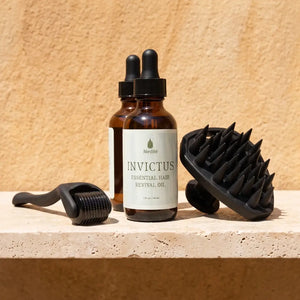
That philosophy guided the development of our Invictus Essential Hair Revival Oil, which was formulated with long term scalp wellness and daily usability in mind.
For people just starting their hair growth journey, our Medíté Starter Kit combines multiple scalp care essentials into a simple routine designed around consistency rather than complexity.
What Healthy Hair Growth Looks Like


One of the most overlooked truths about hair growth is that it rarely looks dramatic day to day.
Most meaningful changes happen gradually.
A little more density around the hairline. Less scalp visibility under bright lighting. Fuller looking coverage in photos. Hair that feels healthier and easier to style.
Those small changes compound over time.
That is why the conversation around hair growth is increasingly shifting away from miracle claims and toward scalp health, formulation quality, and sustainable routines.
The Mirror Is Not Always Telling the Full Story

Bright lights can be brutally honest.
They can also be misleading.
The same head of hair can look dramatically different depending on lighting, moisture, angle, and styling. Understanding that reality helps separate normal visual effects from genuine density changes.
For people concerned about thinning hair, bright lighting should not be a source of panic.
It should simply be a reminder to pay attention to scalp health, stay consistent with your routine, and focus on long term progress rather than one harsh reflection on a random Tuesday afternoon.