Hair growth oils are everywhere, and so is the skepticism. For every glowing testimonial there is someone insisting oils are a waste of money that only make your hair greasy. So which is it?
The evidence-based answer is that certain hair growth oils genuinely work, but not all of them, and not in the way the flashiest marketing suggests. A few have real clinical trials behind them. Most rely on tradition and hope. Knowing which is which is the difference between wasted money and visibly healthier hair.
Here is what the research actually shows, how these oils work, and what to realistically expect.
Do hair growth oils actually work?
Yes, the evidence-backed ones can work, with two honest qualifiers. They work best for supporting thinning-but-active follicles and reducing shedding, and they work through consistency over months, not overnight.
What a good oil does is improve the scalp environment: better circulation, less inflammation, and a healthier surface for hair to grow through its natural cycle. What no oil does is regrow follicles that are already dead or override genetics on its own. Set your expectations there and oils become one of the most sensible low-risk tools available. Expect a miracle and you will be disappointed by any product in this category.
What the research actually shows about hair growth oils

The strength of the evidence varies a lot by ingredient. Here is where the real human and clinical data sits.
Rosemary oil has the most convincing human trial. In a six-month randomized study of people with pattern hair loss, rosemary oil produced a significant increase in hair count and performed comparably to 2 percent minoxidil, the leading over-the-counter drug, while causing less scalp itching. We break that study down in does rosemary oil actually help with hair growth.
Essential oils combined with scalp massage also hold up in a controlled trial. In a randomized, double-blind study of 86 people with patchy hair loss, those who massaged a blend of rosemary, thyme, lavender, and cedarwood oils into the scalp daily saw a 44 percent improvement rate, versus 15 percent for the group using plain carrier oil. That difference was statistically significant, and it points to the actives doing real work rather than the massage alone.
Peppermint oil shows strong early promise. In a controlled animal study, 3 percent peppermint oil outperformed 3 percent minoxidil on follicle number, follicle depth, and growth-phase markers. The human evidence is still catching up, but the mechanism is compelling.
Tea tree oil earns its keep on scalp health. A controlled trial found a 5 percent tea tree oil shampoo improved dandruff by 41 percent versus 11 percent for placebo, which matters because an inflamed, flaky scalp is a poor place to grow hair.
How do hair growth oils work?


Effective oils are not moisturizers for your strands. They act on the scalp and the follicles beneath it, usually through three overlapping mechanisms.
The first is circulation. Oils like rosemary and peppermint increase blood flow to the scalp, delivering more oxygen and nutrients to follicles that need them to sustain the growth phase.
The second is calming inflammation. Chronic low-grade scalp inflammation is a quiet contributor to thinning and to follicle miniaturization, the gradual shrinking that makes each new hair finer than the last. Several of these oils have anti-inflammatory activity, and rosemary in particular has been studied for its ability to blunt the local effects of DHT, the hormone behind most hair loss. Our explainer on what DHT is covers that pathway in depth.
The third is scalp health. Ingredients like tea tree keep the scalp balanced and free of the irritation and microbial overgrowth that disrupt growth. A healthy foundation is what lets the other two mechanisms translate into visible results.
Application also matters more than people think. Massaging the oil into the scalp adds mechanical stimulation that supports circulation and helps the actives absorb, which is partly why the massage-based trials performed so well.
Who do hair growth oils work best for?

Hair growth oils deliver the most for people in the earlier stages of thinning, where follicles are shrinking or shedding but still alive and capable of recovery.
If you are noticing gradual thinning, increased shedding, reduced density, or a hairline that is softening rather than fully receded, this is exactly the window where supporting the scalp pays off. Acting earlier consistently produces better outcomes than waiting.
If your hair loss is advanced, with long-established bald areas where the follicles are gone, no topical oil will bring those back. In that situation oils can still help maintain the hair you have, but the honest expectation is preservation, not regeneration. Anyone with rapid or patchy loss should also see a dermatologist to rule out a treatable underlying cause.
Are hair growth oils better than minoxidil?

Not better across the board, but they are a legitimate alternative or complement. Minoxidil has a larger overall body of evidence and is a proven drug, so it remains the benchmark.
That said, rosemary oil matched 2 percent minoxidil in a head-to-head trial with fewer side effects like itching, which makes natural oils a reasonable choice for people who want a gentler, plant-based route or who did not tolerate minoxidil well. Some people use both, pairing the drug with an oil-and-massage routine to support overall scalp health.
How long do hair growth oils take to work?

Plan on three to six months of consistent use before judging results, and understand that the timeline is set by biology, not the product.
Hair grows on a fixed cycle, so any support you provide has to wait for follicles to move through their resting and growth phases before new, healthier hair appears on the surface. This is why the credible studies ran for six to seven months. We explain the full timeline in why hair growth takes so long. Any product promising visible regrowth in two weeks is making a claim the hair cycle cannot support.
What separates an oil that works from one that does not

Since the ingredient decides everything, the formula is what makes or breaks a hair growth oil. The ones that work put researched actives, especially rosemary and peppermint, high on the ingredient list in meaningful concentrations, rather than burying a drop of rosemary in a bottle of cheap filler oil.
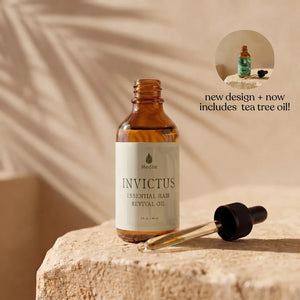
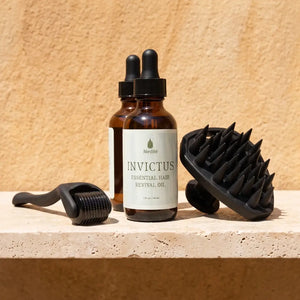
This is the approach behind Medíté's Invictus Essential Hair Revival Oil, which is built around rosemary and peppermint, the two most researched oils, with tea tree for scalp health. The reasoning and the studies behind each ingredient are laid out on the Why It Works page, and the formula is backed by more than 1,000 verified reviews at a 4.8-star average and a 90-day money-back guarantee, which lowers the risk of finding out whether it works for you. U.S. orders over $45 ship free with a welcome gift included.
Because application is half the equation, the Medíté Starter Kit pairs the oil with tools for the scalp massage that made the clinical results possible, turning a good oil into a complete routine.
Frequently asked questions about hair growth oils
Do hair growth oils really regrow hair?
Evidence-backed oils like rosemary can increase hair count and thickness in people with active thinning, as shown in controlled trials. They support and revive struggling follicles rather than regenerating follicles that are already gone.
Which hair growth oil has the most scientific evidence?
Rosemary oil has the strongest human evidence, having matched 2 percent minoxidil in a randomized six-month trial. Peppermint and tea tree have supporting research for follicle stimulation and scalp health respectively.
Are hair growth oils a scam?
The category includes both proven ingredients and pure hype. Oils built around rosemary and peppermint have real trials behind them, while products relying only on castor oil or vague claims are far weaker. The ingredient list tells you which you are buying.
Can I use hair growth oil with minoxidil?
Yes. Many people combine them, using minoxidil as the drug and an oil-and-massage routine to support scalp health and circulation. Introduce them gradually and monitor for any irritation.
How often should I use a hair growth oil?
Most formulas work best applied to the scalp several times a week and left in, often overnight, then washed out. Consistency over months matters far more than any single heavy application.
The bottom line on whether hair growth oils work
Hair growth oils are not a myth, but they are not magic either. The ones with real evidence, led by rosemary and supported by peppermint and tea tree, can meaningfully improve density and reduce shedding for people with early, active thinning, provided they are used consistently for several months.
Choose a formula built around the researched actives, apply it to the scalp with a short massage, and give it time. Done that way, a hair growth oil is one of the most reasonable, low-risk investments you can make in keeping and thickening your hair.
Sources
- Panahi Y, et al. "Rosemary oil vs minoxidil 2% for the treatment of androgenetic alopecia: a randomized comparative trial." SKINmed. 2015;13(1):15-21. https://pubmed.ncbi.nlm.nih.gov/25842469/
- Hay IC, Jamieson M, Ormerod AD. "Randomized trial of aromatherapy. Successful treatment for alopecia areata." Archives of Dermatology. 1998;134(11):1349-1352. https://pubmed.ncbi.nlm.nih.gov/9828867/
- Oh JY, Park MA, Kim YC. "Peppermint Oil Promotes Hair Growth without Toxic Signs." Toxicological Research. 2014;30(4):297-304. https://link.springer.com/article/10.5487/TR.2014.30.4.297
- Satchell AC, et al. "Treatment of dandruff with 5% tea tree oil shampoo." Journal of the American Academy of Dermatology. 2002;47(6):852-855. https://pubmed.ncbi.nlm.nih.gov/12451368/