When hair starts thinning, one of the first hopeful thoughts is that a missing vitamin is to blame, and that the right supplement will fix everything. Sometimes that is exactly right. Often it is not, and the supplement aisle is full of promises the science does not support.
The truth is that specific nutrient deficiencies genuinely cause hair loss, but only a handful actually matter, and loading up on the wrong ones can do nothing or even backfire. Here is what the evidence shows about which deficiencies cause shedding, how to know if one is affecting you, and what to do about it.
Can a vitamin deficiency really cause hair loss?
Yes. Because hair follicles contain some of the fastest-dividing cells in the body, they are highly sensitive to shortfalls in the nutrients that fuel that growth. When a key nutrient runs low, the body deprioritizes hair, which is non-essential for survival, and pushes follicles into shedding.
This kind of loss usually shows up as diffuse thinning across the whole scalp, a pattern called telogen effluvium, rather than a receding hairline. The encouraging part is that deficiency-related shedding is typically reversible once the underlying gap is corrected. The catch is that the right fix depends entirely on which nutrient is actually missing, which is why guessing rarely works.
Iron and ferritin: the most common deficiency behind shedding

Iron deficiency is the single most frequent nutritional cause of hair loss, especially in women, and it is often missed because of how it is tested.
Iron is a required cofactor for the enzyme that drives DNA synthesis in the rapidly dividing cells of the hair bulb. When iron runs low, that machinery slows, and follicles shift into shedding. Low ferritin, the protein that reflects your iron stores, is consistently associated with telogen effluvium.
Here is the part most people miss. Standard lab work only flags iron as low when you are approaching outright anemia, often around 10 to 15 ng/mL of ferritin. But many hair specialists find that ferritin needs to sit considerably higher, in the range of 50 to 70 ng/mL, before iron-related shedding resolves. So you can be told your iron is normal while it is still too low for your hair. If you are shedding and have not had ferritin checked specifically, it is worth asking for.
Vitamin D and the hair follicle
Vitamin D plays a surprising and specific role in hair, and the mechanism is more interesting than a simple deficiency story.
The vitamin D receptor, found in hair follicle cells, is essential for the follicle to cycle normally through its growth phases. People with vitamin D mutations affecting that receptor develop a form of hair loss, and low vitamin D levels are frequently reported in people with telogen effluvium, female pattern hair loss, and the autoimmune condition alopecia areata.
The nuance worth knowing is that the receptor matters more than the vitamin level alone, so correcting a deficiency may help but is not a guaranteed switch for regrowth. Still, given how common low vitamin D is and how easily it is corrected, it is a sensible thing to test and address.
Zinc
Zinc is another mineral where a real deficiency clearly drives hair loss. It is involved in protein synthesis and cell division in the follicle, and low zinc has been documented in people with telogen effluvium and alopecia areata.
Zinc deficiency tends to show up in people with certain gut conditions, restrictive diets, or high alcohol intake. As with iron, the point is to correct a genuine shortfall, not to megadose, since too much zinc carries its own problems.
Protein
Hair is made almost entirely of a protein called keratin, so it should be no surprise that a serious protein shortfall shows up in your hair.
When protein intake drops too low, the body conserves it for essential functions and shifts follicles into the resting and shedding phase. This is more common than people expect in very restrictive diets, crash dieting, or eating patterns that quietly under-deliver on protein. Ensuring adequate daily protein is one of the simplest foundations for healthy hair.
The B vitamins and the biotin myth

This is where the supplement industry and the science part ways most sharply, so it is worth being clear.
Biotin deficiency does cause hair loss. But biotin deficiency is genuinely rare, and there is no good evidence that taking biotin supplements grows hair in people who are not deficient. Those viral biotin gummies are doing nothing for the vast majority of people buying them.
There is also a real downside. Supplemental biotin can interfere with common lab tests, including thyroid and cardiac tests, producing false results that can lead to misdiagnosis. Other B vitamins like B12 and folate matter for healthy cell turnover too, but the practical message is simple: fix a deficiency if you have one, and skip the high-dose biotin if you do not.
The vitamins that cause hair loss when you take too much

Here is the nuance almost every article ignores. With some nutrients, excess is as harmful as deficiency, which is another reason blind supplementing is a bad idea.
Too much vitamin A can trigger hair loss, as the body's ability to store it means high-dose supplements can push levels into a range that disrupts the hair cycle. Excess selenium is similarly linked to hair loss and brittle hair. More is not better, and stacking multiple supplements "just in case" can tip you from a deficiency into a toxicity, trading one cause of shedding for another.
How to tell if a deficiency is behind your hair loss

The reliable way to know is testing, not guessing. A few clues point toward a nutritional cause worth investigating.
Deficiency-driven shedding tends to be diffuse, spread evenly across the scalp rather than concentrated at the hairline or crown, which is more typical of the DHT-driven, genetic thinning we cover in what DHT is. It also often follows a trigger like a restrictive diet, heavy periods, pregnancy, illness, or rapid weight loss, and it usually appears as a noticeable increase in overall shedding.
If that sounds like you, a simple blood panel checking ferritin, vitamin D, zinc, and thyroid function is the logical next step. It replaces guesswork with an actual answer, which is the only way to target the right fix. Our overview of the common causes of hair thinning puts the nutritional causes in context alongside the others.
Do hair growth vitamins and supplements actually work?

They work in one specific situation: when you are correcting a real deficiency. A person with low iron who restores their ferritin will often see shedding stop. That is a genuine, evidence-based win.
What does not hold up is the idea that piling on hair vitamins helps someone whose levels are already normal. If you are not deficient, extra supplements give your follicles nothing to work with, and in the case of vitamin A or selenium they can even hurt. Save your money for a test, then supplement only what you are actually missing.
Nutrition and scalp care work on two different problems

It helps to understand that nutrition and topical scalp care address hair from opposite directions, which is why the best results usually come from both.
Nutrition fixes the internal supply line, making sure follicles have the raw materials to build hair. Topical scalp care works on the external environment, supporting circulation, calming inflammation, and keeping the scalp healthy enough for those well-fed follicles to grow through their cycle. One without the other leaves half the picture unaddressed.
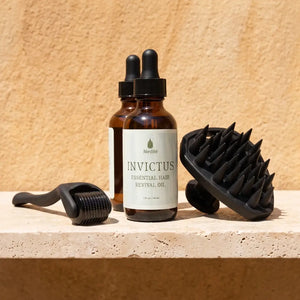
This is where a scalp-focused routine complements a corrected diet rather than competing with it. Ingredients like rosemary and peppermint support circulation and a healthy scalp, the thinking behind our Invictus Essential Hair Revival Oil and the reasoning on our Why It Works page. For a complete routine that pairs the oil with scalp stimulation, the Medíté Starter Kit covers the external half while your diet handles the internal one. Think of it as feeding the follicle and then giving it the best place to grow.
How long until hair grows back after fixing a deficiency?


Expect a few months before you see improvement, and up to six to twelve months for shedding to fully settle and density to visibly recover.
The delay is the hair cycle at work. Once nutrient levels are restored, follicles still have to complete their resting phase and re-enter growth before new hair reaches the surface, a timeline we explain in why hair growth takes so long. Consistency and patience are part of the fix, not a sign it is failing.
Frequently asked questions
What is the most common vitamin deficiency that causes hair loss?
Iron deficiency, reflected by low ferritin, is the most common nutritional cause, particularly in women. It is often overlooked because standard labs flag iron as low only near anemia, while hair may need higher ferritin to recover.
Does vitamin D deficiency cause hair loss?
Low vitamin D is associated with several types of hair loss, and the vitamin D receptor is essential for normal follicle cycling. Correcting a deficiency can help, though the receptor's function matters as much as the blood level.
Does biotin actually help hair growth?
Only if you are biotin deficient, which is rare. There is no evidence that biotin supplements grow hair in people with normal levels, and biotin can interfere with important lab tests.
Can taking too many vitamins cause hair loss?
Yes. Excess vitamin A and excess selenium are both linked to hair loss, which is why supplementing without knowing your levels can backfire.
Should I get tested before taking hair supplements?
Yes. A blood panel for ferritin, vitamin D, zinc, and thyroid function tells you what you actually need, so you can fix a real deficiency instead of guessing.
The bottom line on vitamin deficiencies and hair loss
A handful of deficiencies genuinely cause hair loss, led by iron, followed by vitamin D, zinc, and adequate protein. Correcting a real shortfall can stop shedding and restore growth over several months. But supplements only help when they are filling an actual gap, and overdoing certain nutrients can cause the very problem you are trying to solve.
Get tested, fix what is truly missing, feed your follicles properly, and support the scalp on the outside. That combination, backed by evidence rather than marketing, is how nutrition becomes a real advantage for your hair.
Sources
- Almohanna HM, Ahmed AA, Tsatalis JP, Tosti A. "The Role of Vitamins and Minerals in Hair Loss: A Review." Dermatology and Therapy. 2019;9(1):51-70. https://pubmed.ncbi.nlm.nih.gov/30547302/
- Guo EL, Katta R. "Diet and hair loss: effects of nutrient deficiency and supplement use." Dermatology Practical & Conceptual. 2017;7(1):1-10. https://www.ncbi.nlm.nih.gov/pmc/articles/PMC5315033/
- Trüeb RM. "Serum Biotin Levels in Women Complaining of Hair Loss." International Journal of Trichology. 2016. https://www.ncbi.nlm.nih.gov/pmc/articles/PMC5007276/