You have probably heard that rubbing your scalp for a few minutes a day can make your hair grow thicker. It sounds almost too simple to be real. No prescription, no side effects, no cost beyond your own two hands. So it is fair to be skeptical.
The surprising part is that scalp massage for hair growth is one of the few at-home habits with actual laboratory research behind it. Not marketing claims. Peer-reviewed studies that measured real hair on real people and then went looking at the cells underneath to explain why.
This is the full picture, including the parts most articles skip: what the research proved, what it did not, how the mechanism works beneath your skin, and exactly how to do it so the effort is not wasted.
Do scalp massages help hair growth, or are they just relaxing?

Here is the honest answer up front. Scalp massage is not a cure for pattern baldness, and no serious dermatologist would tell you it is. But the idea that it does nothing for your hair is also wrong. The truth sits in the middle, and it is more interesting than either extreme.
The strongest evidence comes from a 2016 study published in the journal Eplasty. Researchers had nine healthy men use a standardized scalp massage on one side of their head for four minutes a day, every day, for 24 weeks. The other side of the head got no massage and served as a built-in comparison.
At the end of six months, the massaged side showed a measurable increase in hair thickness, from an average of 0.085 mm to 0.092 mm per strand. The untreated side did not change. That is a small number on paper, but multiplied across tens of thousands of strands, thicker individual hairs are exactly what makes a head of hair look denser and fuller.
The study was small, and the men did not have significant hair loss to begin with, so this is not proof that massage regrows a receding hairline. It was also funded in part by a company that makes hair care devices, which is worth knowing. But what makes the research genuinely useful is that the team did not stop at counting hairs. They went looking for the reason.
What actually happens beneath your scalp when you massage it

To understand why massage changed hair thickness, you need to know about the tiny factory at the base of every follicle: the dermal papilla.
Dermal papilla cells sit at the root of each hair and act as the control center for growth. They tell the follicle when to grow, how fast, and how thick. Keep these cells active and well supplied, and hair grows robustly. When they slow down or shrink, follicles miniaturize, meaning each new hair comes in finer and weaker than the last. That gradual shrinking is the core of most thinning and the reason hair loss creeps in slowly rather than all at once.
In the 2016 study, the researchers took human dermal papilla cells and gently stretched them in the lab, mimicking the pulling and shifting that massage creates in the scalp. After 72 hours of this mechanical stretching, the cells changed which genes they were switching on and off. More than 2,600 genes were turned up.
The specific genes matter. Massage increased the activity of growth signals like BMP4, NOGGIN, SMAD4, and several proteins in the WNT and VEGF families, all of which are tied to the active growth phase of hair and to building the blood supply around a follicle. At the same time, it turned down IL-6.
That last detail connects to something Medíté readers already know. IL-6 is an inflammatory protein that DHT, the hormone behind most pattern hair loss, uses to shut hair follicles down. In plain terms, DHT-driven thinning and scalp inflammation work partly by cranking up IL-6, and the stretching from massage appeared to push that same signal in the opposite direction. If you want the full background on how that hormone drives thinning, our breakdown of what DHT is and how it shrinks follicles covers it in depth.
Scientists call this response mechanotransduction, which is just the process of cells converting a physical force into a biological signal. Your bones thicken under the load of exercise through the same principle. The scalp study suggests hair follicles may respond to gentle, repeated mechanical stress in a comparable way.
The blood flow connection most people get half right

Ask anyone why scalp massage helps and they will say it boosts circulation. That is true, but it is only part of the story, and getting the nuance right explains why massage works better as a habit than as a one-time treat.
Hair follicles are metabolically demanding. Producing a continuously growing fiber takes a steady supply of oxygen, glucose, amino acids, and micronutrients, all delivered through the network of tiny blood vessels feeding the base of each follicle. When circulation to the scalp is sluggish, follicles are effectively underfed, and underfed follicles produce thinner, shorter hairs.
Massaging the scalp mechanically stimulates the tissue and the vessels beneath it, drawing more blood to the surface. You feel this as warmth. That temporary surge brings a fresh delivery of nutrients to the follicles.
But circulation alone was never going to explain a lasting change in hair thickness, and the researchers acknowledged as much. A few minutes of better blood flow fades quickly. The more durable effect appears to come from the direct mechanical signaling to the dermal papilla cells described above. Blood flow is the supporting actor. The stretching force on the follicle is the lead.
This is also why poor scalp health shows up so often in thinning. A tight, inflamed, or neglected scalp is a worse growing environment, which is a thread we have followed before in pieces on why the scalp itches as hair thins.
What a large survey of real users suggests about consistency

The lab study tells you massage can change hair at the cellular level. A separate 2019 survey published in Dermatology and Therapy gives a sense of what happens when ordinary people try it over a longer stretch.
Researchers followed hundreds of men who committed to a standardized scalp massage routine, and among the 327 who completed the follow-up, roughly 69 percent reported that their hair loss had either stabilized or reversed. Many were doing twice-daily sessions of around 20 minutes.
Read this honestly. It was self-reported, with no untreated control group and no folliscope measuring each strand, so it carries far less weight than a controlled trial. People who stick with a daily routine for months also tend to be motivated in other ways, and expectation can color how someone judges their own hair.
Still, one signal is hard to ignore across both studies: the people who saw benefit were consistent, and they gave it time. Nobody rubbed their head for a week and grew a new hairline. The men in the controlled study needed the full six months before thickness changed measurably. Which raises the obvious question.
How long do scalp massages take to work?

Longer than you want it to, and there is a biological reason that has nothing to do with the massage itself.
Hair grows on a fixed cycle. Each follicle spends years in an active growth phase, then a brief transition, then a resting phase before the old hair sheds and a new one begins. Anything you do to support growth, whether it is massage, a topical, or a better diet, has to wait for follicles to move through that cycle before the results show up on the surface. There is no shortcut around the calendar. We explain the full timeline in why hair growth takes so long.
Set your expectations to the controlled research: think in terms of three to six months of daily practice before judging whether it is doing anything. One quirk worth knowing is that some people notice a little extra shedding early on. In the 2016 study, hair count dipped temporarily at 12 weeks, likely because massage loosened hairs that were already resting and ready to fall, clearing the way for the new ones underneath. A brief uptick in shedding is not the massage failing. It is often the cycle turning over.
How to massage your scalp for hair growth the right way
Technique is where most people quietly sabotage themselves. The goal is to move the scalp itself, not to scrub the hair. Follow these principles and a few minutes a day is enough.
Use the pads of your fingers, not your nails. Place them flat against your scalp and press firmly enough that you feel the skin shift over the skull beneath. That sliding, stretching movement is the mechanical force the research points to. If your fingers are just gliding through your hair, you are missing the point entirely.
Work in small circles and cover the whole scalp, paying attention to the areas where you want support most, such as the crown and the temples along the hairline. Move methodically from front to back and side to side so nothing gets neglected.
Keep the pressure firm but comfortable. This is not about pain. You are aiming for the gentle, repeated stress that stretches the tissue, not for irritation.
Aim for a realistic dose. The controlled study used just four minutes a day and still moved the needle over six months. Five to ten minutes daily is a sensible, sustainable target. Consistency beats intensity every time, so a short massage you actually do each day will always outperform a long one you do twice a month.
A simple way to lock in the habit is to attach it to something you already do, like the few minutes before you fall asleep or while your conditioner sits in the shower.
Fingers or a scalp massager: does the tool matter?
Your fingers are genuinely all you need, and they will never be too abrasive or slip out of your hands. That said, a dedicated scalp massager has real advantages for consistency, which as you now know is the whole game.
A good handheld or silicone scalp massager applies even, repeatable pressure without tiring your hands or letting your nails catch. It also makes the routine feel less like a chore, and a routine that feels good is a routine you keep. Some people simply find it easier to give the whole scalp thorough, even coverage with a tool than with their fingertips.
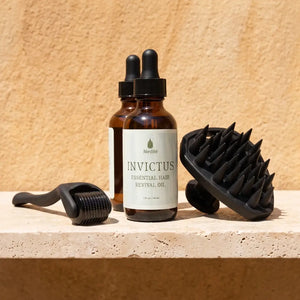
If you want the mechanical stimulation and a way to work products deeper into the scalp in one step, the Medíté Starter Kit pairs a scalp massager with the tools to build the full routine around it rather than leaving massage as a standalone afterthought.
Should you use oil when you massage your scalp?
You do not have to, but it is one of the smartest ways to make the same few minutes do more than one job.
Dry massage delivers the mechanical stretching on its own. Adding the right oil turns that same session into a delivery system, working an active ingredient down to the scalp and follicles while your fingers are already stimulating circulation there. You get the mechanotransduction and the topical benefit from a single habit, which also makes it far more likely you stick with it.
The ingredient worth reaching for is rosemary oil, and not because it is trendy. In a well-known head-to-head trial, rosemary oil performed comparably to 2 percent minoxidil over six months for pattern hair loss, with both groups showing a significant increase in hair count and the rosemary group reporting less scalp itching. We unpack that study and the mechanism in detail in does rosemary oil actually help with hair growth.
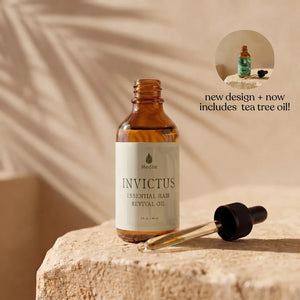
The reason massage and rosemary oil belong together is that they target the same problem from different angles. Massage supports circulation and sends a growth-favoring mechanical signal to the follicle. Rosemary oil brings compounds studied for their effects on scalp inflammation and the follicle environment. Layer them, and you are addressing both the physical stimulation and the chemistry of the scalp in the same routine. Our Invictus Essential Hair Revival Oil was formulated as a massage-and-leave-in step for exactly this reason, and the full breakdown of the ingredients and evidence lives on our Why It Works page.
Warming a few drops between your fingers first helps the oil spread, and a scalp that is already primed with better blood flow from massage tends to feel more receptive to whatever you apply next.
Can scalp massages cause hair loss or thin your hair?
This is a reasonable worry, especially if you notice a few extra hairs in the sink when you start. Done correctly, gentle scalp massage does not cause hair loss. The pressure is soft, the movement is on the skin rather than the strands, and nothing about it damages a healthy follicle.
The trouble only comes from doing it wrong. Aggressive scrubbing with your nails, yanking at wet hair when it is at its most fragile, or massaging so hard that the scalp becomes irritated can break strands and inflame the skin, which is the opposite of what you want. The early shedding some people see is almost always the natural cycle turning over, not damage. Keep it gentle, keep it on the scalp, and it is one of the lowest-risk things you can do for your hair.
What scalp massage can and cannot do
It helps to be clear-eyed about where this fits, because a habit oversold is a habit abandoned.
Scalp massage can support thicker individual strands over months of consistent practice. It can improve blood flow to the follicles, send a growth-favoring signal to the dermal papilla, and turn down some of the inflammatory activity linked to thinning. It creates a healthier growing environment and makes an ideal vehicle for a topical like rosemary oil.
What it cannot do is override genetics on its own or reverse advanced, long-established baldness where follicles have already miniaturized past the point of recovery. If you are dealing with significant or rapidly progressing hair loss, massage belongs alongside proven treatments and a conversation with a dermatologist, not in place of them.
Think of it the way you would think of any single healthy habit. On its own, a short daily massage is a modest, low-cost, evidence-supported contribution. Built into a consistent routine with the right topical and realistic patience, it becomes part of a genuine strategy for a healthier scalp and fuller-looking hair. If you are assembling that routine from scratch, our guide to getting thicker hair naturally shows how the pieces fit together.
The most encouraging thing about scalp massage is not any single study. It is that a habit this simple, this cheap, and this safe has held up under a microscope at all. Give it five minutes a day, add an oil worth massaging in, and give the hair cycle the months it needs to answer.
Sources
- Koyama T, et al. "Standardized Scalp Massage Results in Increased Hair Thickness by Inducing Stretching Forces to Dermal Papilla Cells in the Subcutaneous Tissue." Eplasty. 2016;16:e8. https://pmc.ncbi.nlm.nih.gov/articles/PMC4740347/
- English RS Jr, Barazesh JM. "Self-Assessments of Standardized Scalp Massages for Androgenic Alopecia: Survey Results." Dermatology and Therapy. 2019;9(1):167-178. https://link.springer.com/article/10.1007/s13555-019-0281-6
- Panahi Y, et al. "Rosemary oil vs minoxidil 2% for the treatment of androgenetic alopecia: a randomized comparative trial." SKINmed. 2015;13(1):15-21. https://pubmed.ncbi.nlm.nih.gov/25842469/