You finally get consistent at the gym, and then you spot it: more hair in the shower drain, a little extra on the towel after a heavy session. The internet is quick to blame your workouts, usually pointing a finger at testosterone and DHT.
So does working out cause hair loss, or is that one of the most persistent myths in fitness? The honest, evidence-based answer is reassuring, but it comes with one real catch most articles ignore, and it has nothing to do with hormones.
Does working out cause hair loss, or is it a gym myth?

For the vast majority of people, exercise does not cause hair loss. There is no solid evidence that lifting weights or training hard makes you go bald.
The myth exists because intense exercise does nudge certain hormones upward in the short term, and DHT is the hormone behind most pattern hair loss. That much is true. But the leap from "exercise raises DHT" to "exercise causes baldness" skips over how the process actually works, and that is where the worry falls apart.
Does exercise really raise DHT enough to matter?

Hard training does produce a temporary hormonal bump. After an intense bout, like heavy resistance work or sprint intervals, testosterone and DHT can rise noticeably within minutes.
The key word is temporary. Those levels typically return to baseline within about an hour of finishing. You get a brief spike, not a sustained flood of DHT bathing your follicles all day. Interestingly, the opposite pattern can show up at the extreme end: very high-volume endurance training has sometimes been linked to lower resting testosterone, not higher.
A short, self-resolving hormonal blip is a very different thing from the chronic hormonal exposure that drives genetic hair loss over years.
Why your genetics, not your workout, decide the outcome

Here is the part that matters most. Whether DHT causes hair loss depends almost entirely on whether your follicles are genetically sensitive to it, not on how much DHT is floating around.
If you do not carry the genetic predisposition to pattern hair loss, elevated DHT will not thin your hair no matter how hard you train. If you are genetically susceptible, your follicles are already reacting to your normal DHT levels, and the brief post-workout increase is unlikely to be the deciding factor. Our breakdown of what DHT is and how it drives thinning explains why follicle sensitivity, not circulating hormone levels, is the real trigger.
This is the same logic that settled the creatine question. A recent controlled trial found no meaningful difference in DHT or hair growth between people taking creatine and those on placebo, which we covered in does creatine cause hair loss. The gym-and-baldness fear keeps resurfacing under different names, and the answer keeps coming back the same.
Can sweat cause hair loss or harm your scalp?

Sweat itself does not kill hair follicles or cause baldness. You are not losing hair because your scalp gets sweaty.
But this is the catch worth taking seriously. Sweat mixes with the oil your scalp produces, plus dead skin cells, and if you let that sit for hours it creates a warm, damp environment where yeast and bacteria thrive. That can lead to irritation, flaking, or a condition called folliculitis, where the follicles themselves become inflamed.
None of this is permanent hair loss, but an inflamed, irritated scalp is not a good place to grow strong hair, and it can worsen shedding while it lasts. It is closely tied to the same sebum-and-yeast dynamic behind an oily scalp and dandruff, which we unpack in the science behind a greasy scalp. Trapping all that sweat under a tight hat or headband during and after a workout only adds to the problem, a myth we address in does wearing a hat cause hair loss.
How exercise actually helps your hair

Flip the question around and the picture gets better, because regular exercise is genuinely good for your hair on balance.
Cardiovascular activity improves circulation throughout the body, including to the scalp. Better blood flow means more oxygen and nutrients delivered to the follicles, which supports the active growth phase of the hair cycle.
Exercise also lowers your baseline stress hormones over time. Chronically high cortisol can push follicles out of the growth phase and into shedding, so anything that keeps it in check protects your hair. In that sense, a consistent training habit works against one of the most common causes of diffuse shedding rather than for it.
The real risk is neglecting your scalp after a workout

If exercise threatens your hair at all, it is through scalp hygiene, and that is entirely within your control.
The fix is simple. Do not let sweat and oil sit on your scalp for hours after training. Rinse or wash reasonably soon after a heavy, sweaty session, let your scalp breathe instead of keeping it trapped under a damp cap, and be gentle rather than scrubbing aggressively. Keeping the scalp clean and calm removes the only real mechanism by which working out could work against your hair.
Where scalp care and the right oils fit in

Once the sweat is rinsed away, supporting a healthy scalp environment helps your follicles make the most of the circulation boost exercise already gives them. A calm, well-nourished scalp is the foundation the whole hair cycle depends on.
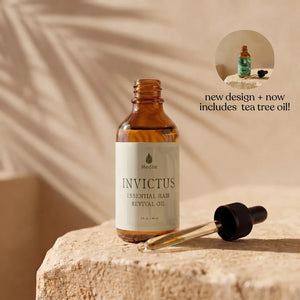
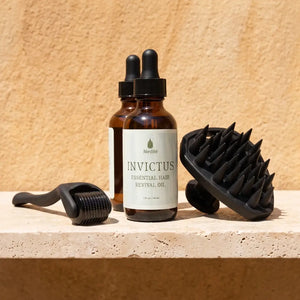
This is the thinking behind our Invictus Essential Hair Revival Oil, which pairs rosemary and tea tree to support circulation and a balanced scalp rather than simply coating it, with the ingredient reasoning laid out on our Why It Works page. If you would rather build a full post-gym scalp routine, the Medíté Starter Kit bundles the oil with tools to work it in properly, and U.S. orders over $45 ship free. Use it as a complement to good hygiene, not a replacement for rinsing off after you train.
The bottom line on working out and hair loss
Lifting weights and breaking a sweat will not make you bald. The temporary DHT bump from exercise is short-lived, and whether DHT thins your hair comes down to genetics, not your training volume. Sweat does not destroy follicles either, though letting it linger on the scalp can cause irritation that is easy to prevent.
On balance, exercise supports your hair through better circulation and lower stress. Train hard, rinse off afterward, look after your scalp, and the gym stays firmly on your side.
Sources
- Vingren JL, et al. "Testosterone physiology in resistance exercise and training." Sports Medicine. 2010;40(12):1037-1053. https://pubmed.ncbi.nlm.nih.gov/21058750/
- Kraemer WJ, Ratamess NA. "Hormonal responses and adaptations to resistance exercise and training." Sports Medicine. 2005;35(4):339-361. https://pubmed.ncbi.nlm.nih.gov/15831061/
- Choi S, Zhang B, Hsu YC, et al. "Corticosterone inhibits GAS6 to govern hair follicle stem-cell quiescence." Nature. 2021;592:428-432. https://pubmed.ncbi.nlm.nih.gov/33790465/